The Best Meat Thermometers for Smoking and Grilling (Instant-Read vs Wireless)
Instant-read, wired leave-in or wireless? A plain-language guide to choosing a meat thermometer for smoking, grilling and roasting in Canada.
As an Amazon Associate I earn from qualifying purchases. Backyard North may earn a commission when you buy through links on this page, at no extra cost to you. How we make money.
If you only upgrade one piece of barbecue gear this year, make it the thermometer. Recipes give times, but meat finishes at a temperature. A $15 dial thermometer that’s off by five degrees can be the difference between juicy chicken thighs and dry ones, or between a brisket that slices cleanly and one that falls apart.
There are three main styles, and most people who cook outdoors regularly end up owning two of them.
Instant-read thermometers
Best for: checking doneness at the end of a cook, steaks, chicken pieces, burgers, probing a brisket for tenderness.
You insert the probe, read the number, pull it out. Quality matters here because speed and accuracy matter: a slow thermometer means the lid stays open longer and you’re guessing which part of the meat you’re actually reading.
What to look for:
- Read time of a few seconds or less
- Thin probe tip so you’re reading a precise spot and not leaving big holes
- Auto-rotating or backlit display for reading at night
- Water resistance — it will get greasy and need washing
The Thermapen ONE is widely regarded as the benchmark: ThermoWorks rates it at about one-second readings. If that’s more than you want to spend, ThermoWorks’ ThermoPop line and several other brands offer good mid-range options.
Wired leave-in probe thermometers
Best for: long smokes — brisket, pork shoulder, turkey, prime rib.
A probe stays in the meat for the entire cook with a heat-resistant cable running to a base unit. Many have two to four probes so you can track the meat and the grate temperature at the same time. Some connect to your phone over Bluetooth or Wi-Fi.
What to look for:
- At least two probes (one meat, one ambient)
- High and low alarms so you’re alerted when the pit drifts
- Braided cables rated for smoker temperatures
- Range that reaches your couch, if it connects to your phone
Truly wireless probes
Best for: rotisserie, convenience, people who hate cables, and cooking where a cable won’t fit.
These are self-contained probes with no wire at all. The probe sends readings to a charger/booster block or straight to your phone. Many also read the ambient temperature at the handle end.
The trade-offs: range can be limited by thick steel lids, the batteries are small, and they cost more per probe. In a Canadian winter, cold can also shorten battery life, so keep the probe charged and the base unit inside a pocket or a warm spot when possible.
Which should you buy?
| If you mostly… | Buy |
|---|---|
| Grill steaks, burgers and chicken | A good instant-read |
| Smoke big cuts on weekends | A two-probe leave-in plus an instant-read |
| Want phone alerts and no cables | A wireless probe plus an instant-read |
| Cook for a crowd at holidays | A four-probe leave-in |
The instant-read shows up in every row for a reason: even with a leave-in probe, you’ll want to spot-check thick cuts in more than one place.
Target temperatures worth bookmarking
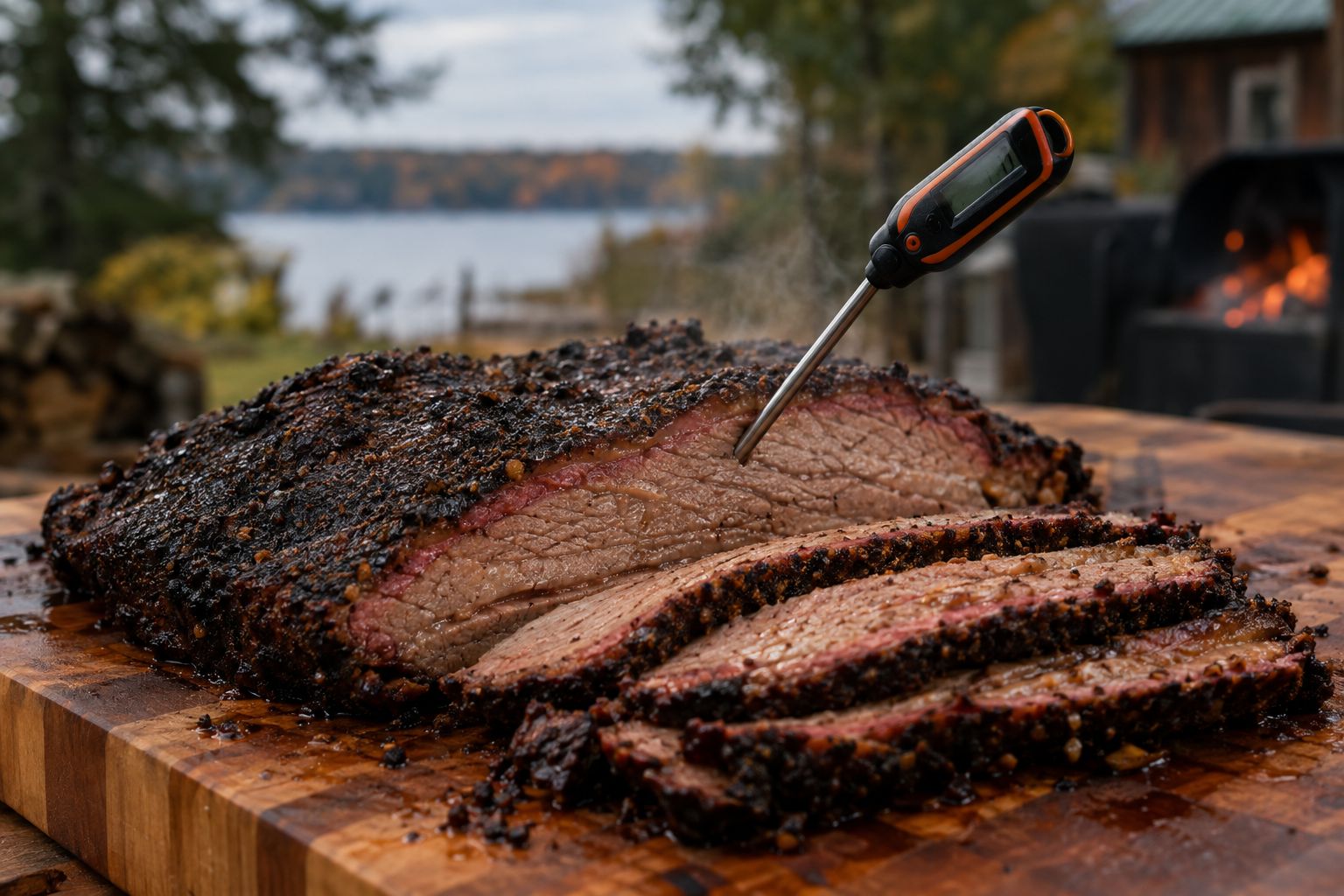
Health Canada publishes safe internal cooking temperatures — for example, 74°C (165°F) for poultry pieces and 71°C (160°F) for ground beef and pork. Smoked brisket and pulled pork are cooked well past “safe” to break down connective tissue; most pitmasters pull them somewhere around 93–96°C (200–205°F), probing for tenderness.
Care tips
- Wipe probes clean right after use; never submerge the base unit unless it’s rated for it.
- Don’t wrap probe cables tightly — kinks break the wires inside.
- Check calibration in ice water now and then (it should read 0°C).
Recommendations are based on manufacturer specifications and verified owner reviews. Prices change often — check the current price before you buy.