Snow Blower Buying Guide: Single-Stage vs Two-Stage vs Battery for Canadian Driveways
How to choose the right snow blower for your driveway, snowfall and storage space — including when battery models make sense and when you still want gas.
As an Amazon Associate I earn from qualifying purchases. Backyard North may earn a commission when you buy through links on this page, at no extra cost to you. How we make money.
A snow blower is one of those purchases that feels expensive right up until the morning after a 30 cm dump with a plow ridge at the end of the driveway. Then it feels cheap. The trick is buying the right type: too small and you’ll be fighting it every storm; too big and you’ve paid for capacity you never use.
The three main types
Single-stage
An auger scoops snow and throws it out the chute in one motion. The auger touches the ground, which helps pull the machine forward and clears down to pavement.
- Good for: paved driveways up to about two cars wide, snowfalls under roughly 20–25 cm, lighter snow.
- Not great for: gravel driveways (it will throw stones), heavy wet snow or the hard-packed plow ridge.
- Pros: lighter, easier to store, cheaper.
Two-stage
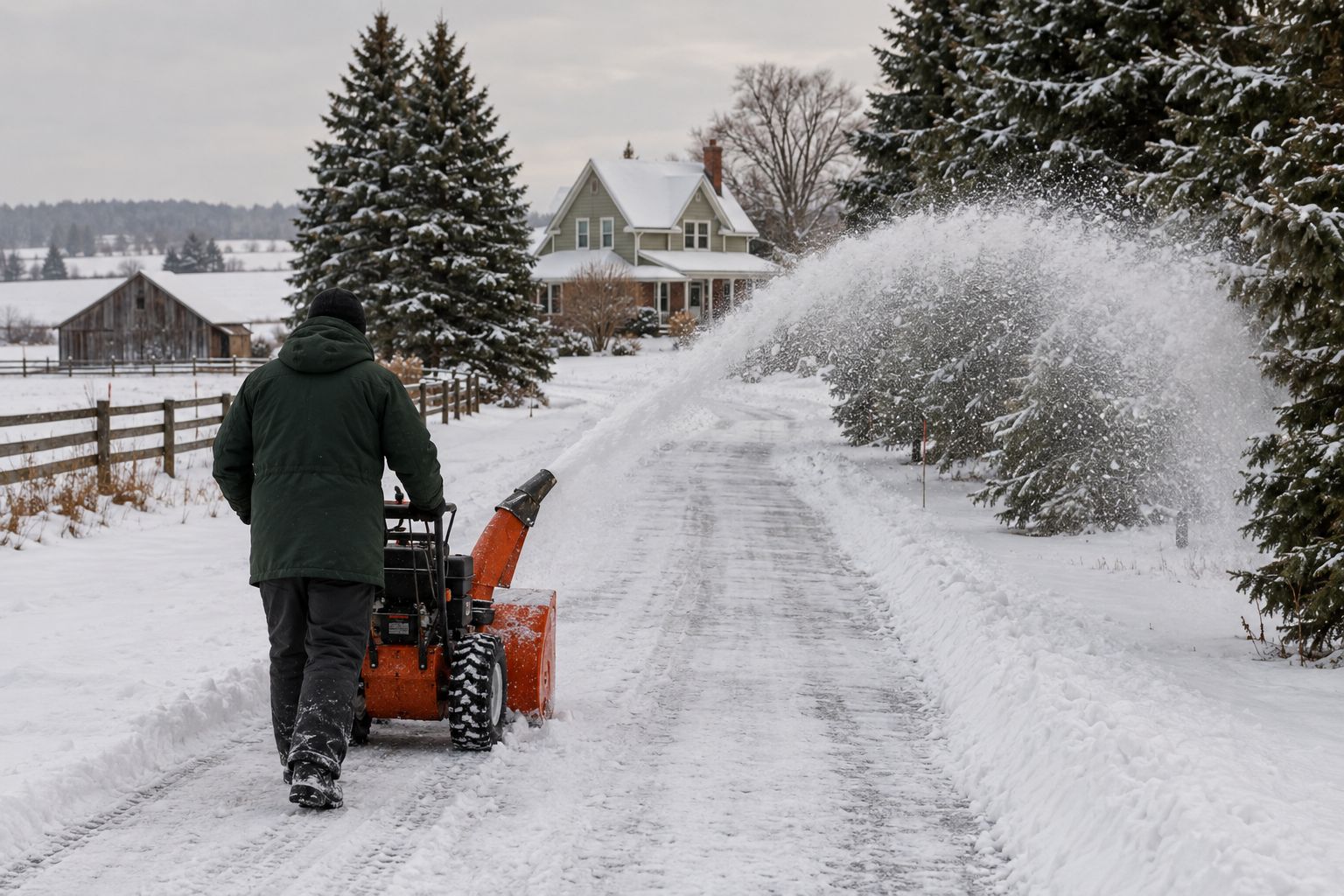
An auger feeds snow to a high-speed impeller that throws it much farther. The auger sits slightly above the ground, so two-stage machines work on gravel. Most are self-propelled.
- Good for: long or wide driveways, gravel, heavy snow and plow ridges, rural properties.
- Pros: handles the worst storms, throws snow 10+ metres on many models.
- Cons: heavier, bigger to store, more maintenance on gas models.
Battery-powered
Battery snow blowers have improved a lot. Several brands now sell single-stage and even two-stage battery machines that share batteries with mowers and leaf blowers.
- Good for: suburban driveways, people who hate small-engine maintenance, users already invested in a battery platform.
- Watch for: run time per charge (buy a second battery if your driveway is long), and lower performance in extreme cold. Store batteries indoors.
Quick decision chart
| Your situation | Best fit |
|---|---|
| Short paved driveway, light-to-moderate snow | Single-stage (battery or gas) |
| Paved, 2–3 cars wide, lake-effect snow | Battery two-stage or gas two-stage |
| Gravel driveway | Two-stage only |
| Long rural laneway, heavy drifting | Gas two-stage, 26”+ clearing width |
| Small storage space | Single-stage or compact battery model |
Features worth paying for
- Electric start on gas models — plug in, push a button, especially welcome at -25°C.
- Self-propelled drive on two-stage machines.
- Easy chute control — a joystick or crank you can adjust without stopping.
- LED headlight for dark mornings before work.
- Heated grips if you clear a big area.
Maintenance basics
- Use fresh fuel with a stabilizer, and run gas models dry or stabilize the fuel before summer storage.
- Keep spare shear pins (two-stage) — they’re designed to break if you hit something hard, protecting the gearbox.
- Spray the chute and auger housing with a non-stick spray so wet snow doesn’t clog.
- Store battery packs indoors at room temperature.
Safety
Never clear a clog with your hand, even with the engine off — the auger or impeller can still be under tension. Use the clearing tool that comes with most machines, or a broom handle. Wear hearing protection on gas models and keep kids and pets clear of the chute.
Bottom line
Match the machine to your driveway surface and typical snowfall, not the worst storm you remember. Paved and modest? A single-stage or battery machine will save you money and space. Gravel, long, or regularly buried by the plow? Go two-stage.
Recommendations are based on manufacturer specifications and verified owner reviews. Check current prices and specs before you buy.