Hardwood Pellet Flavour Guide: Which Wood for Which Meat (Plus How to Store Them)
Hickory, cherry, apple, oak, maple, mesquite and blends — what each pellet tastes like, what to pair it with, and how to keep pellets dry in a Canadian climate.
As an Amazon Associate I earn from qualifying purchases. Backyard North may earn a commission when you buy through links on this page, at no extra cost to you. How we make money.
Your pellet grill’s flavour comes from the wood you feed it. Pellets aren’t magic — most are compressed hardwood sawdust held together by the wood’s natural lignin — but the species and quality make a real difference in smoke flavour, ash and how steady your temperature runs.
How to read a pellet bag
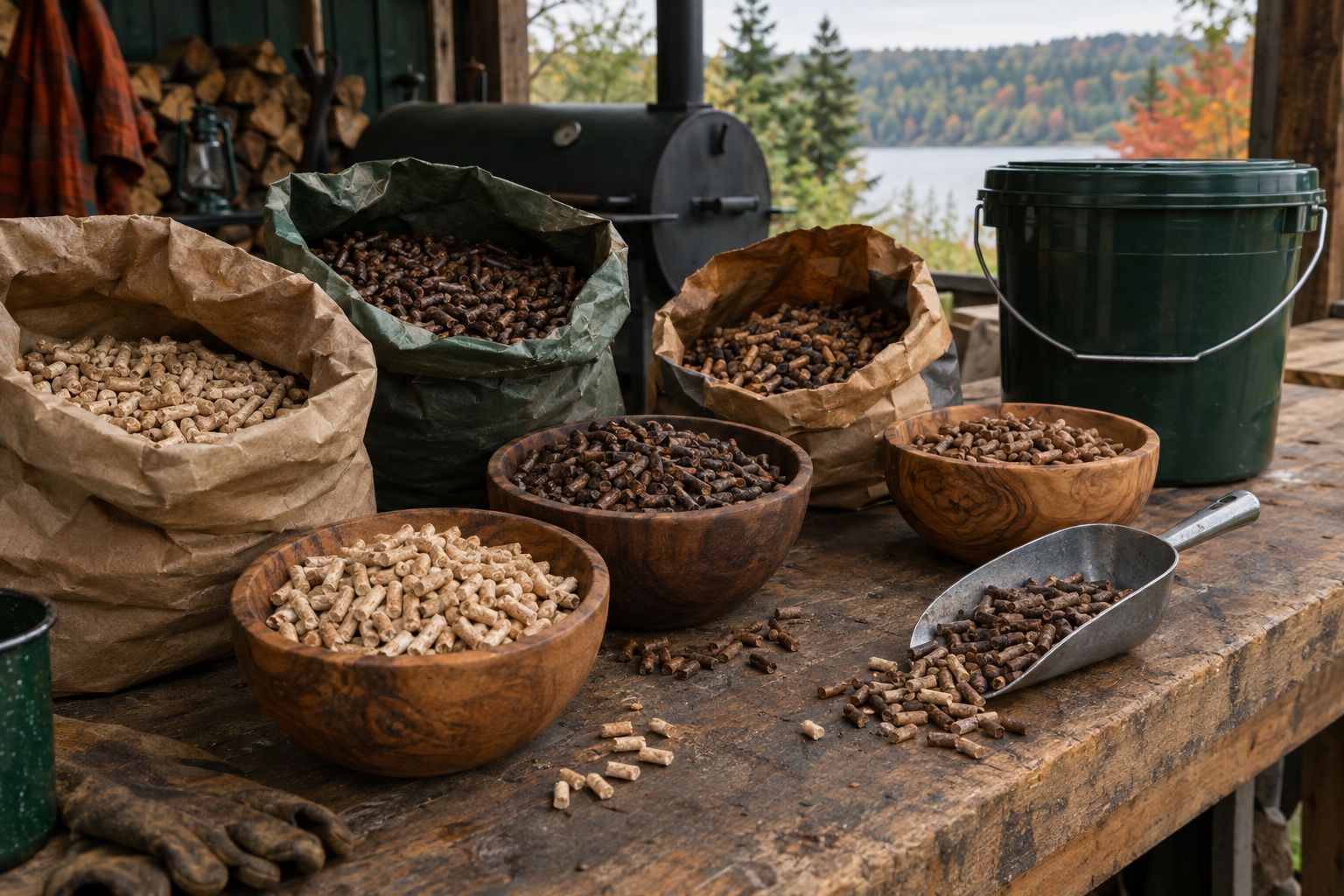
- 100% single species vs flavoured blends. Some “hickory” or “cherry” pellets are mostly a base wood like oak or alder, with the named wood added for flavour. That’s not necessarily bad — blends burn consistently — but if you want strong cherry, look for bags that state the species percentage.
- No fillers or added oils. Look for food-grade hardwood with no binders.
- Low dust. A lot of fines at the bottom of a bag means more ash and inconsistent feeding.
Flavour pairing chart
| Wood | Smoke character | Great with |
|---|---|---|
| Hickory | Strong, bacon-like, classic barbecue | Pork shoulder, ribs, bacon, beef |
| Oak | Medium, clean, the “Texas” backbone | Brisket, beef ribs, almost anything |
| Mesquite | Very bold, earthy, can turn bitter on long cooks | Quick-cooked beef, steaks, fajitas |
| Cherry | Mild, fruity, gives a deep mahogany colour | Pork, poultry, ribs, ham |
| Apple | Mild, sweet, subtle | Chicken, pork chops, fish, cheese |
| Maple | Mild, slightly sweet — a natural Canadian favourite | Pork, poultry, vegetables, back bacon |
| Pecan | Medium, nutty, a little sweet | Poultry, pork, baked goods |
| Alder | Light, delicate | Salmon and other fish |
| Competition / BBQ blends | Balanced hickory-cherry-maple style | All-purpose — great first bag |
A practical approach for beginners: buy one all-purpose blend for everyday cooks, and one bag of a single species you’re curious about. Try the same recipe with both and taste the difference.
Getting more smoke flavour
Pellet grills burn clean, which some people find too subtle. To get more smoke:
- Start cold meat at low temperature (around 107–121°C / 225–250°F) for the first couple of hours, when meat absorbs the most smoke.
- Use your grill’s smoke or “super smoke” mode if it has one.
- Add a smoke tube. A perforated tube filled with pellets smoulders alongside the main fire and adds noticeable smoke for a few hours.
Storing pellets in Canada
Our climate is hard on pellets: humid summers, wet springs and snowmelt all invite moisture, and damp pellets swell and crumble. Swollen pellets can jam augers and cause flame-outs.
- Never store bags directly on a concrete garage floor. Concrete wicks moisture.
- Use an airtight container — a gasketed bucket or bin with a lid.
- Empty the hopper if the grill will sit for more than a week or two, especially in shoulder seasons.
- Sift before loading. Dumping the dusty bottom of a bag into the hopper adds ash and inconsistency.
Simple test: snap a pellet in half. Good pellets break with a clean crack. If it bends or crumbles, it has absorbed moisture — don’t burn it in your grill.
How many pellets will you go through?
Burn rate varies a lot with grill size, temperature and weather. Low-and-slow smoking in mild weather might use roughly 1 lb an hour, while high-heat cooking or a cold, windy day can use two or three times that. A 20 lb bag can disappear fast on a February brisket, so keep a spare.
Bottom line
Start with a good blend, experiment with one or two single species, and store everything airtight and off the floor. Dry pellets mean steady temperatures, cleaner smoke and fewer startup headaches.
Recommendations are based on manufacturer information and verified owner reviews. Check current prices before you buy.