Buying Your First Pellet Grill in Canada: What to Look For (and What to Skip)
A no-hype buying guide to pellet grills for Canadian beginners: size, controllers, build quality, Wi-Fi, warranty and the questions to ask before you buy.
As an Amazon Associate I earn from qualifying purchases. Backyard North may earn a commission when you buy through links on this page, at no extra cost to you. How we make money.
Pellet grills are the easiest way into real wood-fired barbecue. You load hardwood pellets, set a temperature, and a controller feeds fuel to hold it. No fire management, no all-night vents. But the market is crowded, and two grills that look identical in a store photo can perform very differently on a windy November afternoon.
Here is how to cut through it.
Start with how many people you cook for
Cooking area is usually listed in square inches, and manufacturers count the upper warming rack, so treat the number as optimistic.
- Couple or small family: roughly 450–600 sq in. Fits a brisket or two pork butts.
- Family of 4–6, occasional crowds: 600–900 sq in.
- Big gatherings, multiple briskets: 900+ sq in.
Bigger isn’t free: a larger chamber takes more pellets to heat, especially in winter.
The controller matters more than the logo
The controller decides how steady your temperature stays. Look for:
- PID controller. It adjusts the auger and fan continuously instead of cycling on a fixed timer, which generally means tighter temperature swings.
- Meat probe ports built into the controller.
- A low “smoke” setting if you love heavy smoke flavour.
Wi-Fi or app control is genuinely useful for long cooks — you can check the pit and adjust temperature from inside — but it is a convenience, not a requirement. If the app requires a subscription for basic features, factor that in.
Build quality: what to check in person
- Lid fit. Gaps leak heat and smoke, which matters a lot here in the cold.
- Steel thickness and paint quality. Thin steel with cheap paint rusts quickly in a salty, snowy climate.
- Hopper capacity. 18–24 lbs is comfortable for overnight cooks.
- Easy ash cleanout and grease management. You’ll clean these often.
- Sturdy legs and real wheels if you’ll roll it in and out of a covered spot.
Warranty and parts in Canada
This is the quiet deal-breaker. Before you buy, check: Is there a Canadian distributor or service centre? How long is the warranty on the controller and fire pot, which are the common failure points? Can you buy replacement igniters, probes and augers from a Canadian source without paying cross-border shipping and duty?
Models worth a look
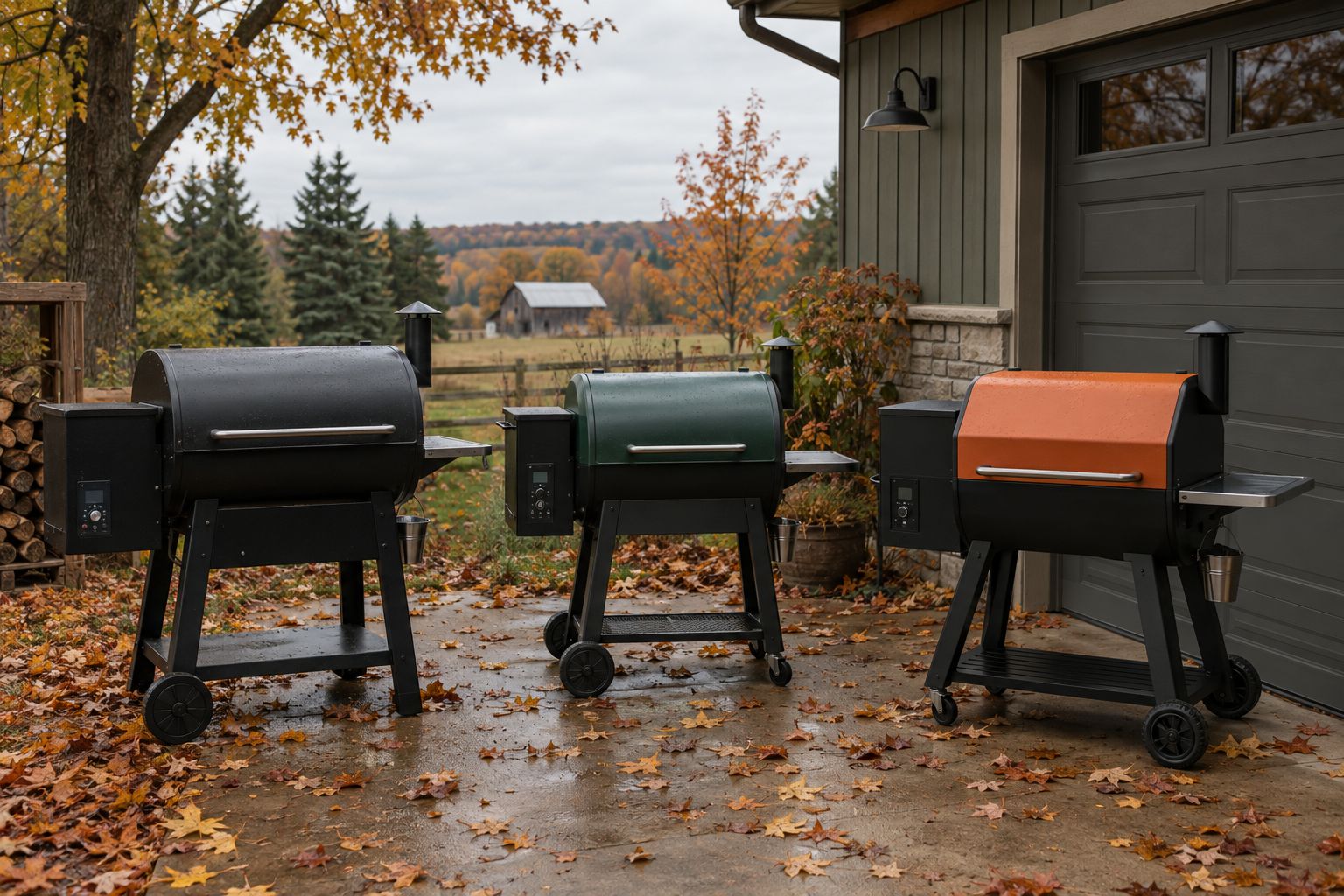
These are well-known, widely available in Canada and popular starting points. Compare current specs and warranty terms before buying.
Traeger Pro series (Pro 575 / Pro 780)
Traeger’s mainstream line, with app control and a large dealer network across Canada. A safe, popular choice with lots of accessories and community recipes.
Pit Boss (various series)
Pit Boss is known for offering a lot of cooking area for the money, and many models include a direct-flame sear option. Strong value pick for first-time buyers.
Camp Chef Woodwind
Camp Chef’s Woodwind line is known for features like Slide and Grill direct-flame access and a convenient ash-cleanout system.
Green Mountain Grills (Ledge / Peak / Trek)
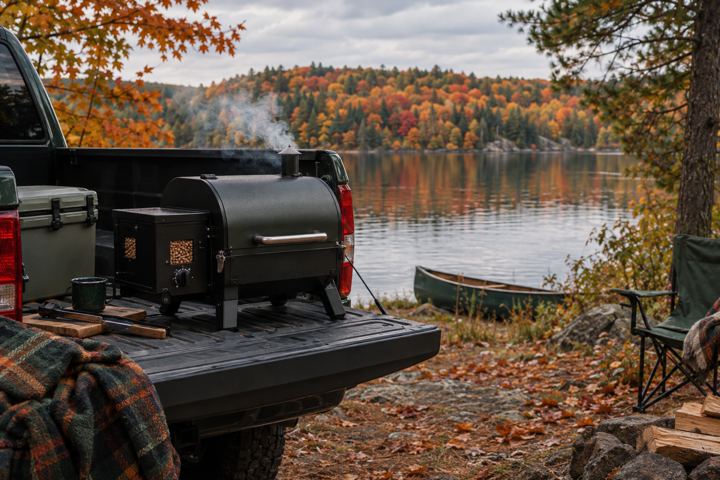
GMG offers full-size models plus the compact Trek, which runs on 12V and fits on a tailgate. If you’re short on space or love camping, see our portable pellet grill guide.
Budget for the extras
Your first-week shopping list will likely include:
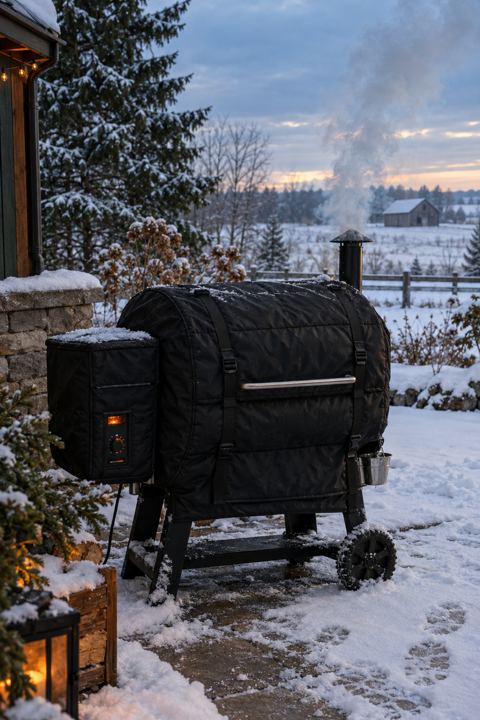
- A cover (snow and freeze-thaw cycles are hard on electronics)
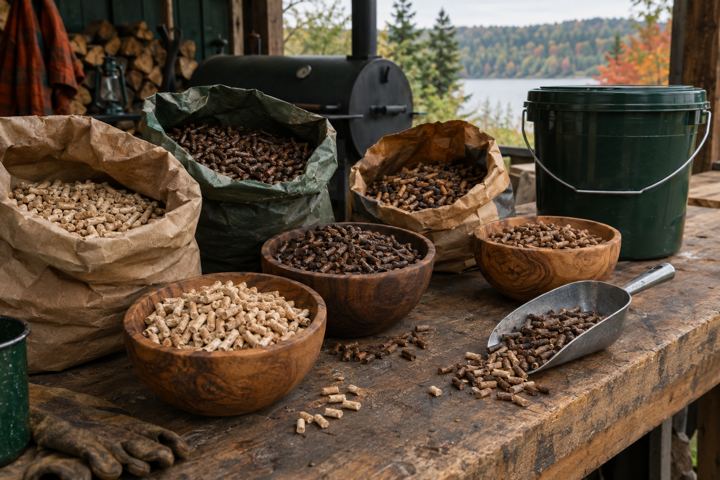
- Two or three bags of quality pellets — see our pellet flavour guide
- A good instant-read thermometer — see our thermometer guide
- Heat-resistant gloves and a long spatula or tongs
- An insulated blanket if you plan to cook through the winter
What to skip
- “Up to 500°F+” searing promises from budget grills. Pellet grills can grill well, but if steak searing is a priority, choose a model with a direct-flame option or plan to use a cast-iron pan or griddle.
- Paying for size you won’t use. You’ll burn the extra pellets every cook.
- Unknown brands with no Canadian support. A cheap grill with a dead controller and no parts is the most expensive grill you’ll own.
Bottom line
Choose the size you’ll actually use, prioritize a PID controller and a well-sealed lid, and confirm parts and warranty support in Canada. Get those right and any of the major brands will make you a better barbecue cook than you were last year.
Recommendations are based on manufacturer specifications and verified owner reviews. Check current prices and specs before you buy.