Pellet Grilling Through a Canadian Winter: The Gear and Habits That Actually Matter
How to keep a pellet grill running in sub-zero weather, which accessories are worth buying, and the habits that save pellets, igniters and dinner.
As an Amazon Associate I earn from qualifying purchases. Backyard North may earn a commission when you buy through links on this page, at no extra cost to you. How we make money.
A pellet grill is a fan, an auger and a hot rod controlled by a small computer. That combination is brilliant in July and a little fussy in January. Cold air, wind and moisture all push the controller to burn more fuel to hold temperature, and the wrong habits can turn a two-bag cook into a three-bag cook — or leave you with a jammed auger.
The good news: with a few inexpensive accessories and some routine, you can smoke a pork butt in February without babysitting it. Here is what makes the biggest difference.
Why pellet grills struggle in the cold
Most pellet grills are built from relatively thin steel. When the outside air is -15°C, the cooking chamber is constantly losing heat through the lid and walls, so the controller feeds more pellets to compensate. Wind is worse than cold: a steady breeze across the grill strips heat off the surface and can disrupt the fire pot’s airflow.
Moisture is the other enemy. Pellets are compressed sawdust, and once they absorb water they swell, crumble and turn back into mush. In an auger, that mush sets up like concrete.
1. An insulated blanket is the single best upgrade
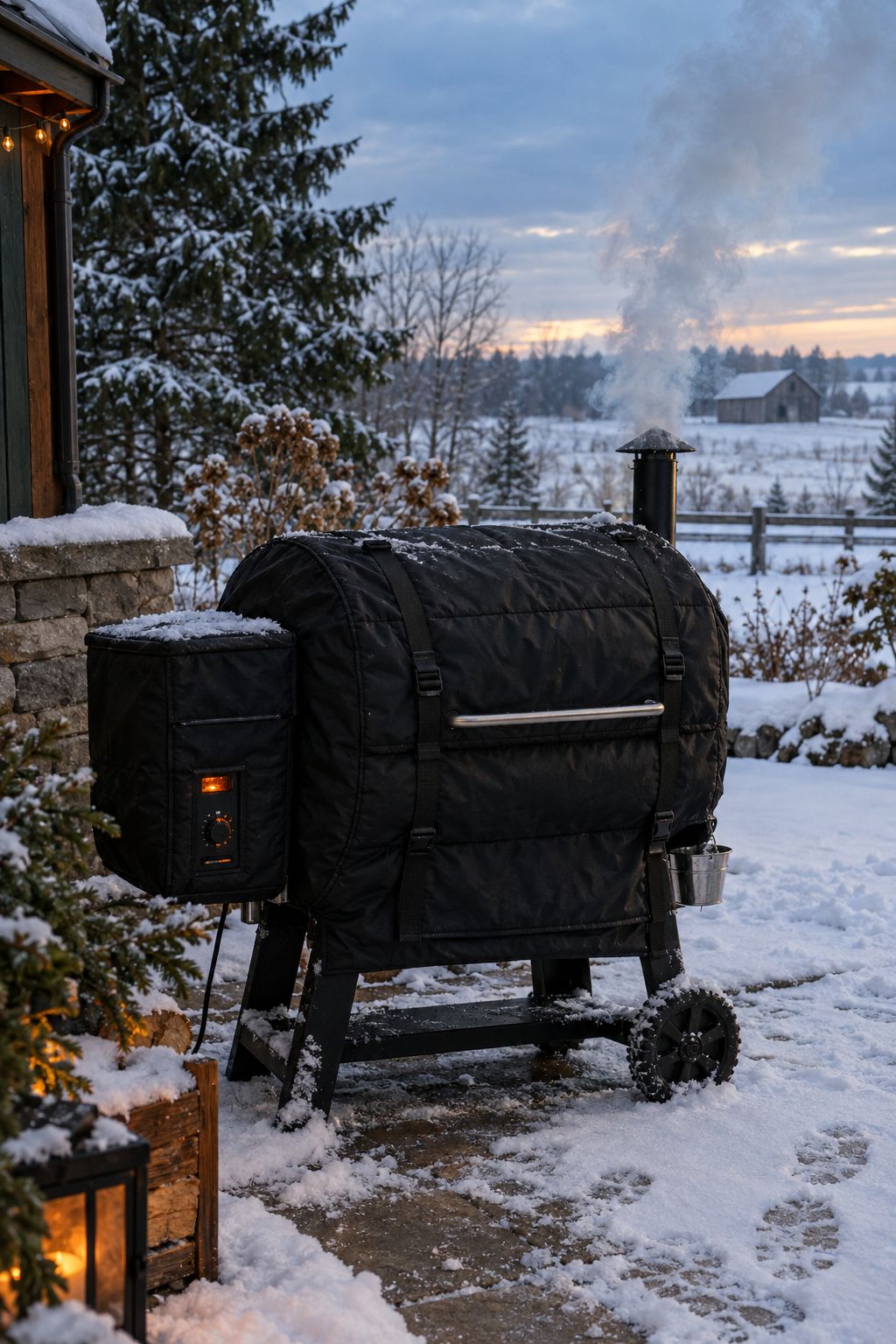
If you buy one thing, make it a fitted thermal blanket for your specific grill model. Most major brands sell one, and third-party versions exist for popular models. Owners commonly report noticeably lower pellet use and faster recovery after opening the lid.
What to look for:
- Made for your exact model. Universal blankets leave gaps or cover vents they shouldn’t.
- Cut-outs for the chimney, controller and grease bucket.
- Rated for the temperatures you cook at. Most are meant for smoking and moderate roasting, not 260°C searing — check the maker’s limit.
2. Block the wind
Position the grill so the wind hits the back, not the lid seam or the fire pot intake. A simple windbreak — the side of the house, a fence panel, even a sheet of plywood leaned safely out of the way of the chimney — helps a lot. Never move a pellet grill into a garage, shed or under a low overhang to escape weather. Carbon monoxide and fire risk are not worth it.
3. Store pellets like they’re bread flour
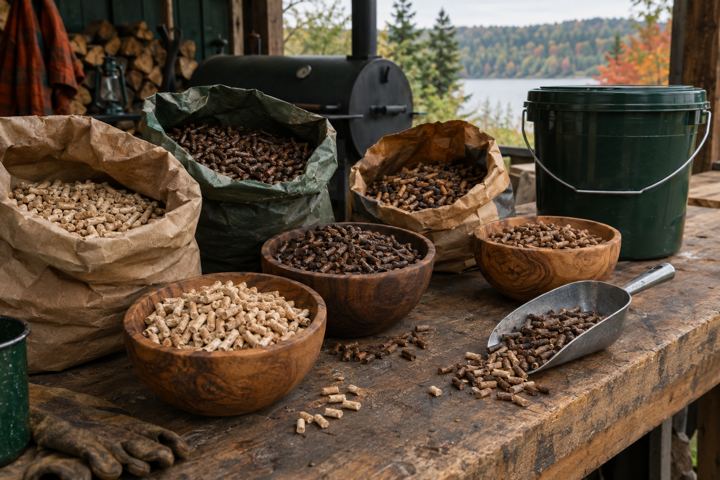
Keep pellets indoors or in a sealed container. A gasketed, lidded bucket or a dedicated pellet storage bin with a scoop keeps humidity and snowmelt out. Avoid leaving pellets in the hopper between cooks during snowy weeks; the hopper lid is not a weather seal.
If you hear the auger straining, or the fire won’t catch, check the hopper for clumps before blaming the controller.
4. Use a reliable thermometer — and trust it over the lid display
Built-in grill probes read the air near one spot in the chamber. In the cold, temperatures swing more and the gap between the display and the grate can widen. A good leave-in or wireless probe tells you what is actually happening inside the meat, so you open the lid less often. (Every lid opening in January can cost you 10 minutes of recovery.)
See our full meat thermometer guide for more options.
5. Plan cooks with more margin
Winter cooks take longer and burn more fuel. A few habits help:
- Start earlier than you think. Add an hour of buffer to big cooks.
- Fill the hopper fully and keep a second bag dry and handy.
- Wrap sooner. Wrapping brisket or pork butt in butcher paper or foil once the bark sets helps push through the stall when the grill is fighting the cold.
- Rest in a cooler. A dry cooler lined with towels keeps meat hot for hours while you clean up.
6. Keep the fire pot and igniter clean
Ash builds up faster during long, high-fuel winter cooks. Vacuum the fire pot every few cooks with a shop vac or ash vacuum (only when the grill is completely cold). A clean fire pot lights more reliably and wears the igniter less.
7. Shut down properly
Always run the grill’s shutdown cycle. It burns off pellets in the fire pot so they don’t smoulder or cause a flare-up on the next start. Once the grill is cold, cover it — a good cover keeps snow from melting into the hopper and controller.
The short version
Blanket, windbreak, dry pellets, a real thermometer and a cleaner fire pot. Do those five things and winter pellet grilling stops being a fight. Your neighbours will smell brisket on a snowy Sunday and wonder what they’re missing.
Recommendations are based on manufacturer specifications and verified owner reviews. Always follow your grill maker’s manual for clearances and safe operation.